• Why am I seeing low-quality adverts on FreeUKGenealogy websites?

    We've had a few people get in touch recently asking why some of the adverts they see on our websites don't seem very relevant, and in some cases feel a bit... low quality.

    The answer usually comes down to one simple choice: whether or not you accept personalised advertising via cookies.

    What's the difference?

    When you visit our sites, you're asked whether you're happy to accept cookies. One of the ways we use them is to allow our partners to determine which adverts you may see: in other words, whether or not you’ll receive personalised adverts. If you accept cookies, the ads you’ll see will be personalised ads, since you’ll enable advertisers to show you content based on your interests (for example, genealogy services, books, or things you've searched for elsewhere).

    If you decline cookies, you’ll still see ads, but advertisers are no longer able to tailor what you see.

    That second option is absolutely fine, and entirely your choice. However, it does have an unintended side effect.

    Why do the ads look worse?

    Advertisers try to show their ads to people who are likely to be interested. If personalisation is switched on, they can target those audiences more precisely.

    If personalisation is switched off, that targeting isn't possible. As a result advertisers will show ads “blindly”, i.e. the ads that appear are often more generic, or sometimes the kind of "clickbait" content many people dislike.

    So it's not that we are choosing to show poorer adverts. It's due to how the advertising ecosystem works behind the scenes.

    An example of a low-quality advertisement

    Why do we show ads at all?

    FreeBMD, FreeCEN, FreeREG, and (soon) FreePRO are free to use and always will be. However, keeping it free for you has a cost

    Advertising is our main source of income and helps us to:

    • keep the websites running
    • maintain and improve the data
    • support our volunteers and infrastructure

    Without it, we wouldn't be able to provide access to over 500 million records for free.

    At the same time, we know that advertising can affect how the site feels to use. We are committed to finding the right balance between generating the income we need and providing a good experience for our users. We are actively testing and finding ways to improve how adverts are displayed, with the aim of making them less intrusive while keeping our services sustainable.

    An example of a better quality advertisement

    What can you do?

    You are always in control of your preferences. If you are seeing adverts that feel irrelevant or poor quality, you may wish to review your cookie settings and consider allowing personalised ads. Many users find this results in more relevant and less intrusive advertising.
    If you prefer not to, that's completely fine too. We respect that choice, and we'll continue working to improve the experience as much as we can within those constraints.

    We’d love your feedback

    We are actively exploring ways to improve both the user experience and how advertising appears on the site. If you have thoughts, please do get in touch via the Contact form.

  • FreeBMD... but not as we know it?

    As you may know, FreeBMD is our largest project with over 25,000 visitors searching the database per week. Despite being the original website from 1998 (!), family history researchers clearly value the completeness of the database and its powerful search facility.

    For over a decade, Free UK Genealogy has been committed to refreshing our websites to make them more accessible to everyone in this modern age. The new FreeREG website was released in 2012 and FreeCEN followed in the summer of 2017; the enhancement of these sites offered improved readability, accessibility, and usability for all researchers.

    In the course of enhancing our systems across the three projects, we are revamping the much-loved FreeBMD website!

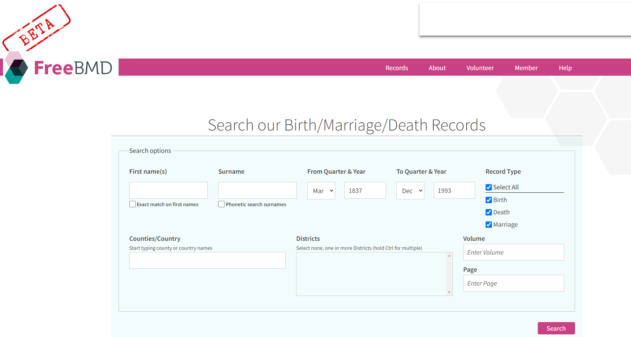
    We’re thrilled to share a teaser of the new FreeBMD search page, below. We hope you’re as excited as we are to try out the more intuitive, dynamic website; we’re sure it’ll help you take your family history research to the next level. 

    The new-look FreeBMD website. Look out for some useful new features...

    We expect the new FreeBMD website ("FreeBMD2") to be released for beta testing in 2025. As a volunteer-led charity, your donations and support have played a big part in helping us to reach this point. On behalf of everyone at FreeUKGEN and the wider genealogy community, thank you!

  • What's in a name?

    Anna Wilson is a Free UK Genealogy volunteer and PHAROS student.

    Here, she shares with us an example of how FreeREG helped her track down the baptism record of her four-times great grandfather, William Dunbar.


    I have been researching my family history since 2004 after discovering three Victorian photograph albums in a dark corner of my parent's attic. It's a large attic and was full of ‘stuff’ so these albums had been left untouched for years. My father stated that he had never seen them before even though the house had been his family home since the 1960s. 

    The photograph albums led to the discovery that my paternal great-grandparents were Scottish and offered me the opportunity to delve into the amazing records available at ScotlandsPeople.

    This was until I came across the name of my four times great grandfather William Dunbar. I easily found trees online which included William and a baptism record for him on the 14th April 1754 in Whittinghame, East Lothian. The actual baptism record detailed the name of his father Alexander Dunbar and his mother Helen Pringle, and I happily continued to work on my tree entering in the details of his marriage and children. 

    I tend to bulk the wish list of records I want to purchase with credit at ScotlandsPeople as it keeps me on a focused path rather than straying into looking at ‘potential’ records and using up all my credit. So it was months later that I obtained a copy of Peter Taylor’s will, my three times great grandfather, who had been married to Ratchel DunbarWilliam’s daughter.

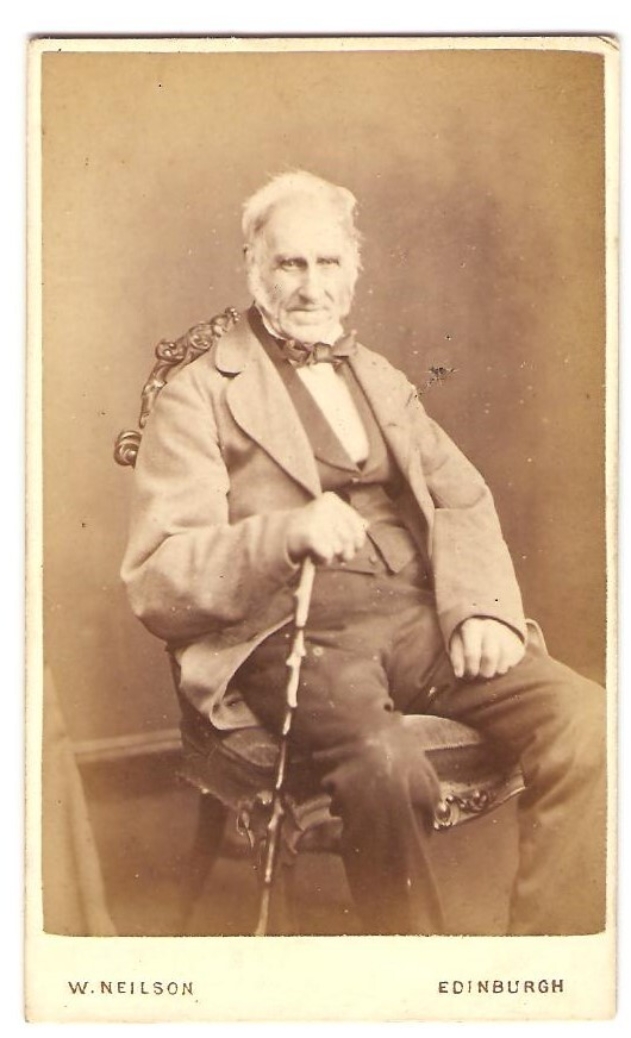
    Peter Taylor, family photograph

    Peter Taylor’s will was a gem of a genealogical document for both the Taylor and Dunbar families. It referred to land that Ratchel had inherited from her father, which had belonged to William Dunbar’s mother… Ratchel Galloway. This was an unfamiliar name: where was Helen Pringle? I revisited the records I had about William. His marriage to Catherine Patterson was in 1785 in Haddington, East Lothian. Their marriage occurred before the introduction of Civil Registration in Scotland in 1855 and so I was reliant on the Old Parish Registers of marriage. The entry stated that they had been irregularly married in Edinburgh – perhaps more information would be in the Kirk Session Records but residing in Somerset a visit to the National Records of Scotland (NRS) would not be happening any time soon.

    So, I searched ScotlandsPeople again changing dates, names, and locations with the same three results but none relating to William Dunbar the son of Alexander Dunbar and Ratchel Galloway

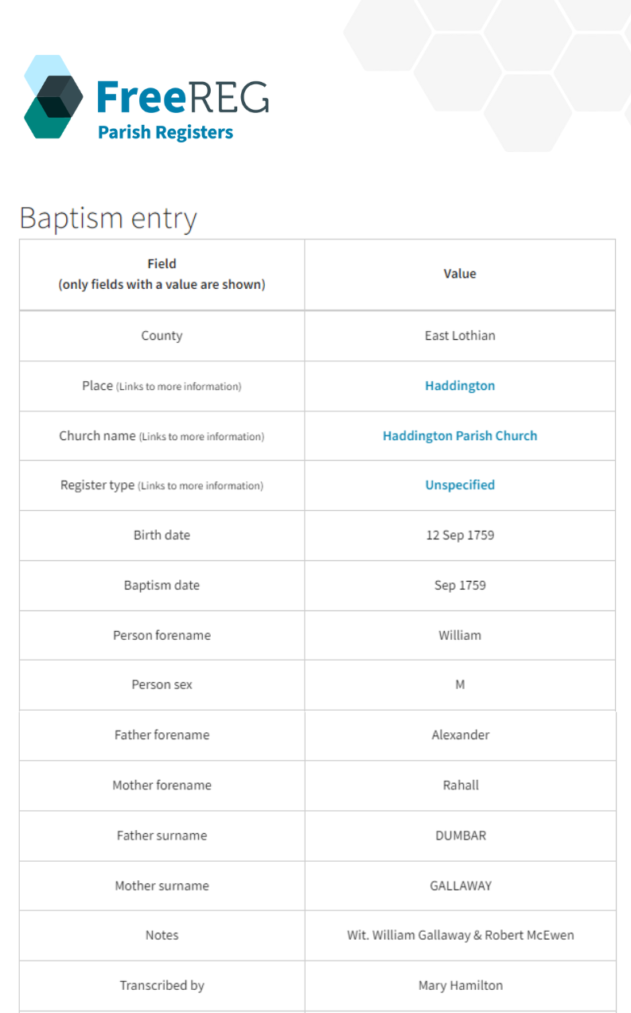
    By 2018 I had been trying to search for William Dunbar’s correct baptism for 2 years. I discovered that FreeREG had great coverage of baptisms, marriages and burials for the East Lothian area. I decided to use their search engine, making sure I used the Soundex facility. In less than a minute, bingo: there he was William Dumbar, baptised in the September of 1759 in Haddington, East Lothian just below the other William Dunbar baptised 1754 in Whittinghame, East Lothian. Clicking on the entry his father was Alexander Dunbar and his mother was transcribed as Rahall Gallaway, with William Gallaway as a witness.

    Baptism record of William Dumbar on FreeREG

    Baptism record of William Dumbar on FreeREG

    So why could I not find the original image on ScotlandsPeople? 

    I went back to ScotlandsPeople and searched using ‘Rahall Galloway’ as William’s parent and used phonetic and wildcard searches to match the transcription of the baptism entry and there it was in the search results. It recorded William Dumbar’s parents as Alexander Dumbar and Rachall Galloway and I was able to purchase the correct baptism for my William Dunbar – leading to a different family to that of Alexander Dunbar and Helen Pringle. 

    So, some valuable lessons learnt along the way:

    • Always verify the information and sources from online trees, 
    • Never give up on brick walls,
    • Find as many records relating to an ancestor as possible,
    • Use as many search facilities as possible to find them,
    • Always use phonetic and wildcard searches on different websites
    • If FreeREG covers your area of interest in Scotland it is a great resource to identify names that have been mistranscribed as well as assist in narrowing down the relevant individual before you spend your credit at ScotlandsPeople.

    I wish I had found FreeREG sooner!

  • Technical roles and Chair of Trustees

    Free UK Genealogy is going through a period of change at the moment, with the retirement from the projects of a number of long-serving staff and volunteers. They have all been critical to the huge success we have had with these projects and I wanted to add my voice to say a big thank you for their long service.

    There is now a greater need for additional technical volunteering. Reflecting on this important priority, Richard Light has decided to move from his current role as Chair of Trustees to a new role, where he will be actively involved in program development (initially on the FreeBMD2 project). He hopes this change will strengthen the links between the software development work and the Trustees, and that it will encourage other volunteer developers to come forward. We believe this will be a great help to this critical need for the organisation and ensure we can continue to be technically robust and develop further into the future.

    The board of trustees have asked me, an existing trustee, to assume the role of chair with effect from September 2022. I wanted to take this opportunity to introduce myself to the projects and explain how I see the role working going forward.

    I have been a trustee of Free UK Genealogy since 2018, but a user of the projects for much longer. I've been researching my family history since 1985 and using FreeBMD, FreeCEN and FreeREG regularly since their early days. I'm passionate about free data, being a founder and former trustee of Wikimedia UK, which supports the Wikipedia family of websites in the UK. My day job is working as a risk manager for a mortgage lender which (whilst very different from FreeUKGEN) gives me a good financial background and I'm familiar with the requirements of good governance.

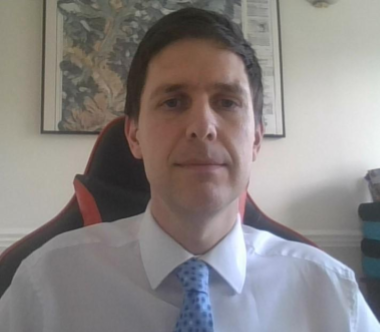
    Andrew Turvey, Chair of Trustees

    As trustees we recognise that we need to improve our communications, in particular with the key project volunteers, and this blog is one of the ways we will do this, The trustees have been very focussed recently on securing our financial future (which I'll share more on shortly) and managing staff changes. However, we realise that it's ultimately the volunteers — transcribers, coordinators, developers etc. — who deliver our goals as a charity: the record transcriptions that our users value so much. Whilst none of us have a magic wand to solve all problems, we want to be better at understanding what we can do to help the projects deliver and develop.

    I know we have sent out quite a few surveys in recent months and a big thank you to everyone who has filled those in. They have given us a much better sense of what we should be focusing on, what is creating value and how we can make a difference. However, they are also (mostly) anonymous which means it's difficult for us to follow up directly on specific comments. If anyone has anything they want to follow up on please feel free to email me any time on Andrew.Turvey@freeukgenealogy.org.uk. I will always be keen to hear feedback on how we are doing and views and ideas on what we can do differently!