• FreeCEN Proofreading: helping transcriptions become searchable

    Every census record on FreeCEN begins its journey in much the same way. A volunteer carefully works through a census page, deciphering 19th-century handwriting and recording the information so that it can eventually be searched by family historians around the world.

    What is less obvious is that transcription is only the first step.

    Before those records can appear on the website, they pass through three stages: transcription, proofreading and validation. Each stage relies on volunteers with different skills, and each plays an important part in producing a high-quality resource that researchers can trust.

    Today, we'd like to shine a light on proofreading.

    A second pair of eyes

    Once a census piece has been transcribed, it is passed to a proofreader.

    The proofreader compares the completed transcription against the original census image, checking each entry carefully. They resolve any queries left by the transcriber, correct the occasional mistake and ensure the spreadsheet is ready for the next stage of the process.

    It is much more than simply reading through someone else's work. It is an opportunity to look at the census page afresh, bringing another perspective to the interpretation of often challenging handwriting.

    Like transcription, proofreading calls for patience, attention to detail and a willingness to take the time needed to get things right.

    An example of a tricky census page

    An important part of the journey

    At the moment, around 1207 census pieces are waiting to be proofread. Together, they contain about a quarter of a million pages. That's up to 7,242,000 people whose census entries have already been transcribed but are not yet available for researchers to discover on FreeCEN.

    Across the project, we currently have only around 26 volunteers who proofread on a regular basis.

    If each proofreader spends an average of three hours a week checking census pieces, it would take well over a year to clear today's backlog alone. Of course, transcription work continues throughout that time, so the queue is constantly growing.

    This is one of those situations where a relatively small number of additional volunteers could make a significant difference.

    Different counties, different needs

    The picture varies across the project.

    Some counties have sufficient active proofreaders and transcribers to keep transcription and proofreading in balance, allowing newly transcribed records to move steadily through the workflow.

    Others, for a number of reasons, have a much larger proofreading backlog. At present, Surrey, Devon and Glamorgan are among the counties where additional proofreading support would have the greatest impact, helping thousands of records move one step closer to publication.

    Is proofreading for you?

    Many volunteers naturally gravitate towards transcription. There is a real satisfaction in tackling a census page for the first time and gradually revealing the information it contains.

    Proofreading offers a different kind of satisfaction.

    It suits people who enjoy careful, methodical work, have an eye for detail, and like comparing a transcription with the original document to make sure the record is as accurate as it can be. If you've spent time transcribing, you'll already be familiar with many of the conventions and challenges involved, making proofreading a natural way to broaden your contribution.

    Even proofreading the occasional census piece can help reduce the backlog and bring more records closer to publication.

    Looking ahead

    Proofreading is the second of the three stages that every census piece passes through before it becomes searchable. The final stage is validation, where volunteers investigate any remaining queries and carry out the final checks before records are added to the FreeCEN database.

    We'll be taking a closer look at validation in our next article, and why it offers another fascinating opportunity for volunteers who enjoy historical and geographical research.

    In the meantime, if your county has little new material to transcribe, or if you're looking for a new way to contribute, why not consider trying proofreading? Every completed piece helps move another part of our shared history a little closer to the people waiting to discover it.
  • FreeREG Coordinator Vacancies

    Can you help FreeREG grow as a County Coordinator? We have several counties with images and transcribers and a caretaker coordinator following retirements. If you’re familiar with transcribing, organised, supportive and confident with digital tools, this flexible home-based volunteer position is ideal for stepping into the role for the first time.

    About the opportunity

    FreeREG is part of Free UK Genealogy, a charity providing free online access to millions of family history records so people can discover and share their family and community stories. Our work depends on dedicated volunteers who transcribe and publish historic parish and register records for public benefit.

    We are looking for committed volunteers from within the FreeREG/Free UK Genealogy community to take on the role of County Coordinator.

    County Coordinators play an important part in helping FreeREG run smoothly. You will support transcribers working on records for your county, help manage the flow of images and data, and act as a key point of contact for both volunteers and researchers.

    The role includes:

    • Supporting transcribers who have completed training and helping them with questions or issues
    • Working with archives and photographers to obtain register images
    • Uploading and organising images on the FreeREG Image Server where permitted
    • Recruiting and supporting volunteer transcribers as needed
    • Assigning transcription work and reviewing submissions to help maintain high standards
    • Responding to enquiries and correction requests from researchers and volunteers
    • Making updates or corrections to records where necessary

    The role is remote (from anywhere in the world) and flexible, with an estimated commitment starting from 4 to 6 hours per week. Most communication takes place online through email and occasional Google Meet video calls.

    At present we have a number of counties where the coordinator has retired and the county is being temporarily managed by a caretaker coordinator. These counties have existing images and transcribers so are a great opportunity for someone to step into the role as a County Coordinator for the first time.

    You will be supported by the wider FreeREG and Free UK Genealogy volunteer community, including our training volunteers, existing FreeREG coordinators and the project leadership team.

    This is an excellent opportunity for someone already familiar with FreeREG who would like to take a more active role in supporting the project and helping preserve accessible family history records for future generations.

    How Coordinators help FreeREG

    FreeREG relies entirely on volunteers to create and maintain high-quality transcriptions of historic parish and register records. County Coordinators are central to making that work possible.

    By supporting transcribers and helping organise the flow of records and images, you will help ensure that valuable historical information becomes freely available online for researchers, historians, and families around the world.

    The role also helps maintain the accuracy and consistency of our records. Your support and oversight will help volunteers feel confident and connected, improving both volunteer retention and the quality of published transcriptions.
    County Coordinators also help strengthen relationships with archives and photographers, making it possible for FreeREG to continue expanding the range of records available to the public.

    Every new set of records published can help someone uncover a family connection, understand their local history, or break through a long-standing research problem. Your contribution will directly support that work and help preserve historical information that might otherwise remain difficult to access.

    As Free UK Genealogy continues developing its projects and volunteer community, County Coordinators play an essential role in sustaining and growing FreeREG for the future.

    What qualities and experience are required for the role?

    We are looking for someone who is organised, approachable, and comfortable supporting other volunteers.

    You should have:

    • An interest in family history and experience as a FreeREG/Free UK Genealogy transcriber
    • Familiarity with parish registers, bishops’ transcripts, or nonconformist records
    • An appreciation for the scholarly nature of FreeREG’s work and understanding of the importance of producing, accurate, and authoritative transcriptions. We place greater importance on quality and reliability than on volume.
    • Good computer skills, particularly using internet browsers and spreadsheets
    • Confidence communicating by email and through online meetings
    • Good organisational skills and attention to detail
    • The ability to respond to enquiries in a timely and supportive way

    It would be beneficial if you have the ability to attend Google Meet video calls using a computer with a camera and microphone.

    To find out more and apply, please email dale.braden@freeukgenealogy.org.uk

  • What Do We Mean By "Place"? Everything You Need to Know About ‘Districts’ in FreeBMD

    When you search for births, marriages or deaths in the Civil Registration Index using FreeBMD, you’ll notice that each entry is registered in a district rather than simply a county. Sometimes the district name matches the county, but often it doesn’t!

    This small detail can make a big difference when you’re trying to find the right certificate for your ancestor, especially if they have a common name. To help explain what registration districts are, and why they matter, we asked one of FreeBMD’s Volunteers, Jeff Coleman (a Syndicate Coordinator and FreeBMD Steering Committee Member) to guide us through everything you need to know.

    What is a ‘district’?

    A registration district is a geographical area responsible for recording births, marriages and deaths (BMDs). Each district has a Superintendent Registrar, who oversees registration within that area, and local registrars who record events in smaller sub-districts.

    Every event is registered in the district where it actually occurred. When you order a certificate, the district name is therefore a vital clue. It appears on official certificates, in the General Register Office (GRO) indexes, and on FreeBMD.

    Today, registration district boundaries in England and Wales broadly follow local authority areas such as counties, metropolitan districts or London boroughs. But when civil registration began in 1837, the story was quite different.

    From Parishes to Poor Law Unions

    Before 1837, England and Wales were divided into counties and parishes, which were responsible for everything from road maintenance to poor relief. Baptisms, marriages and burials were recorded in parish registers.

    As industrialisation reshaped society, the old system struggled. The Poor Law Amendment Act of 1834 grouped parishes into new administrative bodies called Poor Law Unions, which ran workhouses and collected “poor rates”.

    Just a few years later, the Registration Act and the Marriage Act of 1836 introduced civil registration. When the new system came into force on 1 July 1837, each Poor Law Union became a registration district creating 619 districts in total. These were required to send returns to the newly created General Register Office (GRO), which compiled national indexes of births, marriages and deaths. These indexes are the foundation of the FreeBMD database we use today.

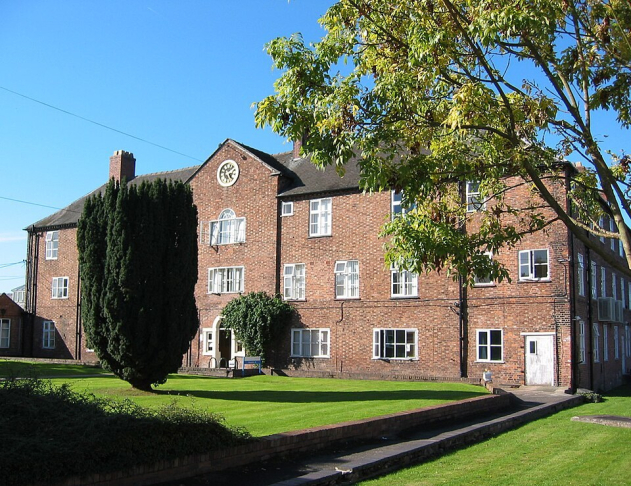
    Workhouse, Nantwich


    How Districts Have Changed Over Time

    Early registration districts were often small, typically covering around 10,000 people, because registrars had to travel by horse or on foot to collect information. As transport improved, districts were merged together into larger ones, especially from the 1930s onward.

    The local government reorganisation of 1974 brought a wave of renamings and mergers, with some changes continuing into the 1990s. Generally, districts are smaller than counties but larger than parishes; some are centred on towns, while others surround them (for example, Atcham almost encircles Shrewsbury).

    So if you find that your ancestor’s district “moves” or disappears between censuses, it’s not your eyes playing tricks, it’s administrative history at work.

    Why Districts Can Be Confusing

    Over the years, registration districts have been merged, renamed, split and reorganised many times. Parishes, or even parts of parishes, could move between districts, sometimes crossing county lines in the process.

    For example:

    • A birth in Choppington, Northumberland, (found in a census) could have been registered in Morpeth district (1837–1936) or later Northumberland Central (1937–1974).
    • Someone born in Port Isaac, Cornwall, would appear under Bodmin district, since Port Isaac was part of the parish of St Endellion, which fell within that district.

    Districts have even come and gone multiple times. Cardiff, for example, existed as a registration district from 1837 until 1974 when it was replaced by South Glamorgan, and then reappeared in 1996 after local government reorganisation.

    To complicate matters further, some districts officially existed but never registered any events (such as Dore, which lasted only a few months in 1837), and some parishes appear in districts centred in other counties, such as Loughor in Glamorgan which was in Llanelly district in Carmarthenshire for nearly a century.

    Behind the Scenes: How Districts Are Transcribed

    All FreeBMD transcriptions come directly from images of the original GRO index pages. Many of these pages handwritten or typed long before digital databases existed. 

    Our transcribers work carefully from these scans, entering each district name exactly as it appears, however unusual it might look. That’s why you might spot abbreviations such as Knaresbro’ for Knaresborough, St Geo East for St George in the East, or Bethnal Gn for Bethnal Green.

    Each entry also includes a volume and page number. Volumes were assigned by the GRO to group areas together (for instance, Volume 1 from 1837 included several London districts such as Bloomsbury and Marylebone, while Volume 6 included Bedfordshire districts like Bedford and Woburn). These volumes don’t always follow county boundaries but reflect how the GRO received and organised information.

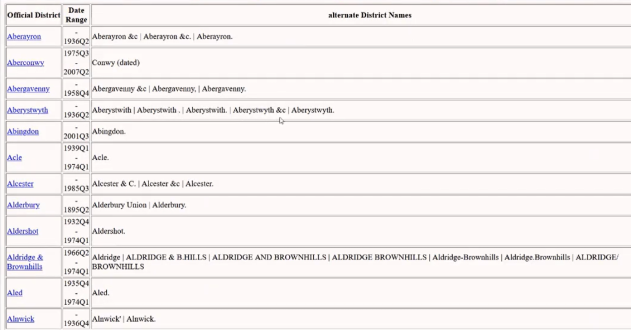
    After transcription, FreeBMD’s district aliasing process matches all the variants, including obsolete spellings like Aberystwith instead of Aberystwyth, to their official district names ensuring that your searches return accurate results.

    Different spellings of some districts in the FreeBMD database


    How FreeBMD Handles District Names

    FreeBMD follows a strict “type what you see” rule when transcribing the GRO indexes. This means that if an entry says Bloomsbury, that’s what appears in the database. Behind the scenes, a process called district aliasing matches these names to their official equivalents.

    For example, a death registered in “Bloomsbury” in 1846 appears on FreeBMD with a note that “Bloomsbury is an alternative name for St Giles.” This ensures your searches will still find the record, no matter which name was used at the time.

    When you click a district name in your search results, FreeBMD links you to its UKBMD page, which lists the parishes it covered, the counties it spanned, and how it changed over time.

    Using Districts in Your Research

    Understanding districts can help narrow down searches for common surnames. For example, all those Smiths in Liverpool! If you know roughly where someone was born or died, focusing on that district can save a lot of time.

    But be careful: a death might be registered in a different district if the person died in a hospital outside their home area. If you can’t find someone where you expect, look at neighbouring districts too. Sometimes you may have to look even further afield if they died whilst travelling.

    When ordering a certificate from the GRO, always check the volume and page number from FreeBMD by viewing the scanned index page. This lets you verify the transcription and ensure you’re ordering the correct record. This saves you time, money, and potential frustration.

    Useful Resources

    To discover which district covered a particular place or how those districts changed, these resources are invaluable:

    • UKBMD: lists registration districts, their dates, and the parishes they contained at different dates, with a downloadable index of place names.
    • GENUKI: provides parish and county histories, often with maps and census links.
    • FreeBMD District Information: explains how districts are used in searches, with links to both county and district details.

    Understanding registration districts isn’t just about geography, it’s about history, too. By learning how these districts were created, changed, and recorded, you’ll gain valuable context for your ancestors’ lives and find their records with greater confidence.


    Article based on contributions from Jeff Coleman, FreeBMD Syndicate Coordinator and Steering Committee Member.

  • What Do We Mean by “Place”? How FreeCEN Uses Location in Census Records

    When you search the UK censuses on FreeCEN, it’s natural to begin with a place — often a birthplace or a county linked to your family. But, as many researchers discover, place in the census is rarely straightforward.

    Census records reflect centuries of administrative change, shifting boundaries, local spellings, and evolving systems of record-keeping. FreeCEN has had to accommodate all of this complexity to make census data searchable, accurate, and useful for family historians today.

    To help explain how this works, this article draws on the experience and research of Geoff Jarvis, Chair of the FreeCEN Steering Committee, who has documented how place is used in UK census records.

    Why censuses are more complicated than they look

    The UK censuses were created for government purposes, not for genealogy.

    The earliest modern census in 1841 collected relatively limited information. Over time, however, the census became a much more detailed statistical tool, designed to inform government policy and planning. By 1921, the scope of information collected closely resembled the type of data gathered by modern official statistics bodies.

    Across the decades, censuses recorded details reflecting contemporary concerns, including occupations, housing conditions, sanitation, population movement, and even the number of rooms with windows in Scottish homes. While this makes census records rich sources of information, it also means they are structured in ways that can be confusing for modern researchers.

    The first meaning of place: where the census was taken

    One of the most important things to understand about census records is that they are organised by where the census was taken, not by place of birth.

    This structure is rooted in historical systems of local administration.

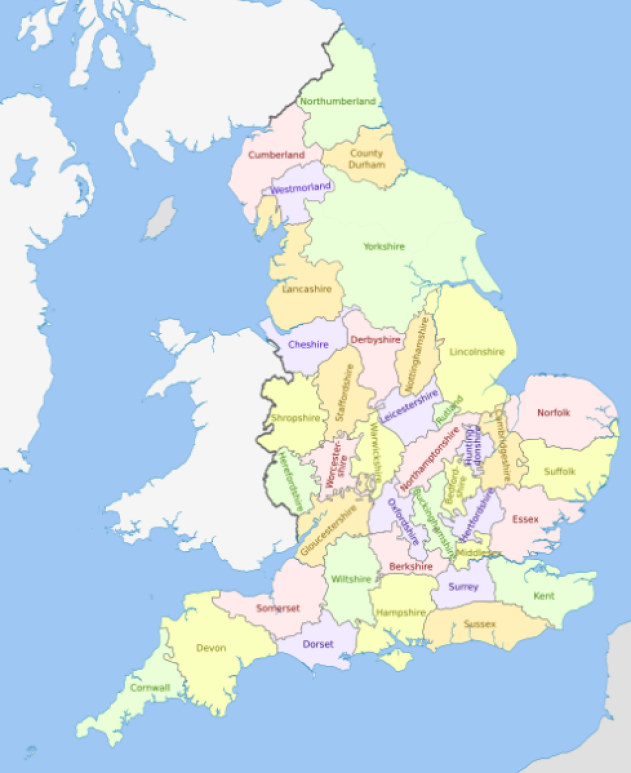
    England Counties 1851 (https://commons.wikimedia.org/...

    From Hundreds to Registration Districts

    Before modern local government, England was divided into administrative units known as Hundreds, with equivalents such as Wapentakes, Wards, Rapes and Lathes used in different parts of the country. These units shaped local administration for many centuries.

    When the first modern census was taken in 1841, census data was collected within ecclesiastical parishes, grouped under Hundreds, which usually followed county boundaries.

    By 1851, administration had shifted to Registration Districts, originally created for civil registration of births, marriages and deaths. These districts were based on Poor Law Unions and were made up of multiple civil parishes. Importantly for researchers, Registration Districts did not always respect county boundaries.

    This historical change still affects how census records are organised and searched today.

    The structure of a census record

    Because of the volume of information collected, each census was divided into a clear hierarchy.
    Using Somerset in 1881 as an example:

    • The county was divided into Registration (Reg'n) Districts
    • Each Registration District was divided into pieces
    • Each piece covered one or more civil parishes
    • Civil parishes were divided into enumerator’s districts

    In practical terms, the structure looks like this:

    Year → County → Reg'n District → Piece → Civil Parish → Enumerator’s District

    This structure is used by The National Archives and underpins how census records are stored, referenced and accessed.

    Why this can be confusing

    Because Registration Districts can cross county boundaries, census records can sometimes appear to place locations in the “wrong” county.

    For example, Appledore in Devon fell within the Registration District of Wellington, which was based in Somerset. As a result, records for Appledore (which is physically located in Devon) may appear under Somerset in the original census organisation.

    For researchers who know where a place is geographically, this can lead to confusion or missed records if searches rely solely on county boundaries.

    One of the key developments in the current version of FreeCEN has been addressing this issue. Historical pieces have been split so that places appear in their correct counties when searched, even when the original administrative structure crossed county lines.

    The second meaning of place: place of birth

    For most family historians, place of birth is one of the most valuable details in a census record — and also one of the most challenging.

    The “Where Born” column may contain:

    • A civil or ecclesiastical parish
    • A town or city
    • A hamlet or village
    • A farm, manor or individual building
    • A vague geographical description

    In the 19th century, spelling was often phonetic, particularly before standardised education became widespread. Enumerators generally spelled local places accurately but were less familiar with names from other parts of the country.

    When combined with local dialects, informal place names, and multiple places sharing the same or similar names, interpreting birthplace information can be difficult. In some counties, including Somerset, several places may have identical or near-identical names that were used differently by local residents.

    The FreeCEN Gazetteer: making sense of place

    To manage this complexity, FreeCEN uses a Gazetteer, a curated database containing over 60,000 place names from across the UK, Ireland and beyond.

    Although largely invisible to users, the Gazetteer is one of FreeCEN’s most important tools.

    Each entry includes:

    • Verified place names and known alternatives
    • Latitude and longitude
    • A source reference, such as GENUKI, Wikipedia or Irish Townlands

    Places are only added when there is reliable evidence that they existed.

    When census records are processed, places of birth are linked to the Gazetteer wherever possible. Where a place cannot be matched automatically due to spelling variations, dialect or ambiguity, it is reviewed during validation.

    Validation: where local knowledge matters

    FreeCEN’s transcription process has four stages: transcribe, proofread, validate and incorporate.

    Validators play a crucial role in resolving place names. Their work may include:

    • Recognising local pronunciations or colloquial names
    • Comparing entries across different census years
    • Researching historical place names
    • Linking phonetic spellings to the correct Gazetteer entry

    FreeCEN follows a strict policy of transcribing exactly what appears in the original record. Any interpretation or correction is added alongside the original wording, rather than replacing it. This approach preserves the historical record while still making the data usable for searching.

    Why geography matters for searching

    Because each Gazetteer entry includes latitude and longitude, FreeCEN can support searches by geographic location as well as by name.
    This is particularly helpful for:

    • Researchers unfamiliar with UK geography
    • Overseas users
    • Cases where place names are vague or inaccurate

    Searching around a location rather than relying on an exact place name can uncover records that might otherwise be missed.

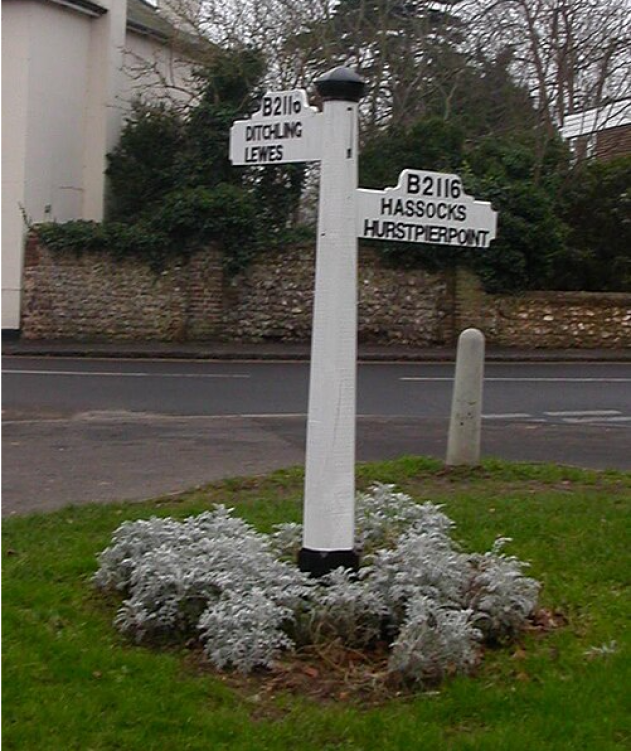
    Old Fingerpost in Keymer (West Sussex)

    Four meanings of “place” in FreeCEN

    Within FreeCEN, place has several distinct but interconnected meanings:

    1. The place where the census was taken
    2. The place of birth recorded in the census
    3. The geographical place recorded in the Gazetteer
    4. Administrative places such as Hundreds and Registration Districts

    Understanding these different layers helps explain why census research can sometimes feel complicated, and why a flexible approach to searching is often more successful.

    Place is history, not just geography

    Places change over time. Names evolve, boundaries shift, villages shrink or disappear, and farms become fields. Census records capture places as they were understood at a particular moment in history.

    By preserving this complexity rather than simplifying it away, FreeCEN maintains both the historical accuracy of the records and the context of people’s lives, giving researchers a clearer path to finding their ancestors.

    Useful resources

    To explore census places in more depth, the following resources are particularly helpful:

    GENUKI – parish, county and local history information

    The National Archives – census structure and piece references

    Understanding census places isn’t just about geography — it’s about history. Learning how places were recorded, changed and interpreted will give you greater confidence and insight in your research.


    With thanks to Geoff Jarvis, Chair of the FreeCEN Steering Committee, for his expertise and extensive work documenting census places.